
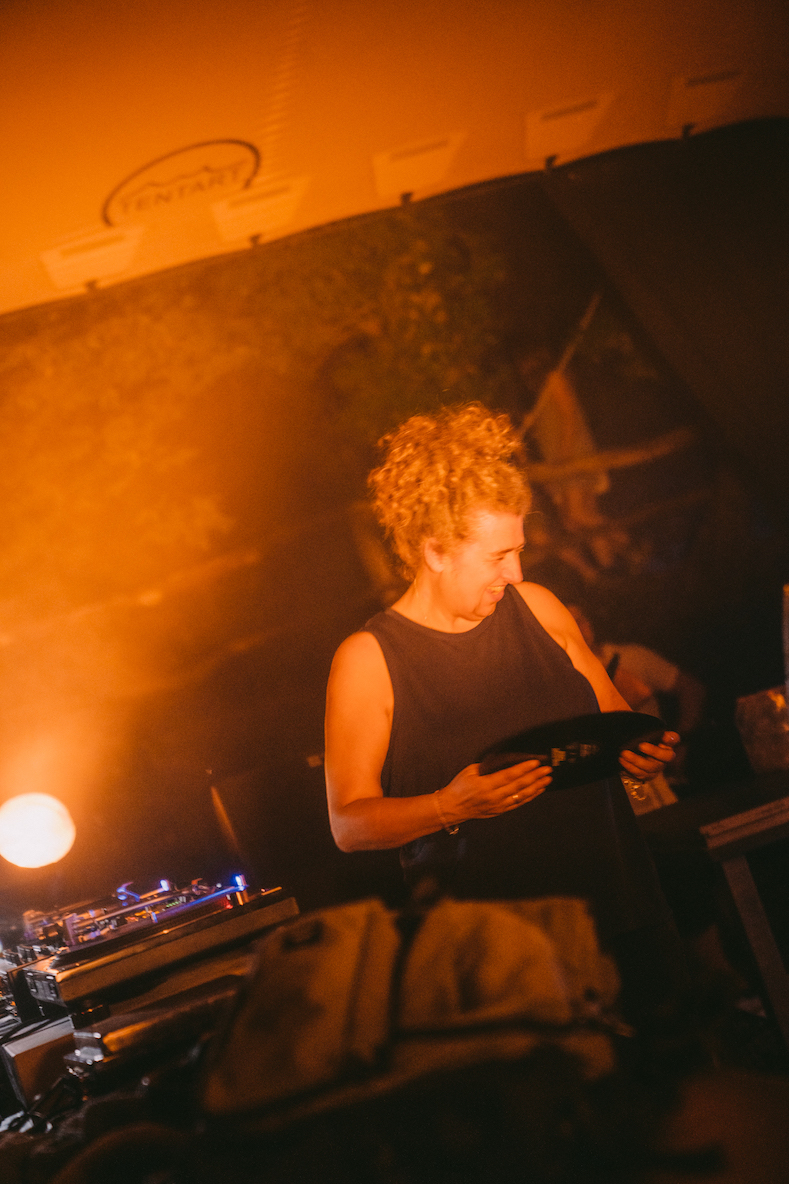
Listen to Jane Fitz‘ GROOVE podcast here.
Zur deutschensprachigen Fassung des Interviews gelangt ihr hier.
Yesterday they created a Beatport account, today they’re already a DJ star. In the fast-paced world of electronic music, success can come quickly. With a few beatmatching skills, the right social media channels, useful connections, and a sound that “works,” it’s possible to build a DJ profile that signals success from the outside in a remarkably short time.
What often gets lost in the process, however, is something that cannot be accelerated: depth. The kind of musical depth and deeper understanding that only emerge when you truly immerse yourself in the culture.
A deeper understanding of the decades-long, stylistically rich history of electronic dance music. A deeper understanding of the contexts in which this music exists: Which club? Which festival? What time of day? Who is playing before and after? Anyone who wants to be a DJ should think about all of these things. Yet in a present where algorithms dictate speed and visibility, and DJing is increasingly understood as a profession rather than a passion, there is often little room for such exploration. It requires patience, curiosity, and a genuine devotion cultivated over many years.
It is precisely this kind of dedication that makes Jane Fitz exceptional.
The British DJ belongs to that rare category of artists who have followed this path consistently—slowly, deeply, and without compromise. She has spent more than two decades behind the decks without ever losing her curiosity. From her beginnings in Hong Kong in the late 1990s, through the ten years of her club night Peg, to Night Moves, which she has been running intermittently with her friend Jade Seatle since 2012, she has carved out a unique position within the global DJ landscape.
Musically, Jane Fitz moves effortlessly between house, techno, trance, acid, and trip-hop—not as an exercise in eclecticism for its own sake, but as the result of a profound and historically rooted relationship with music. She plays exclusively on vinyl: precise, focused, and with an exceptional sense of dynamics, tension, and rhythm. Her record collection is not a static archive but a living, growing organism, filled with B-sides and musical detours that suddenly make perfect sense within her sets.
Shortly after the release of the co-curated compilation Mysterious Vastness, and only a few hours before her Night Moves set at the Berlin institution Panorama Bar, GROOVE writer Michael Leuffen spoke with Jane Fitz about her earliest experiences as a DJ in childhood, vinyl as a creative methodology, and why she has no desire to disappear into the crowd while partying.
Jane, what first made you want to play music for other people?
Jane Fitz: I don’t remember a transition into DJing. I started playing records for people when I was 13. I’d bring records to house parties from school. I liked dancing, but I didn’t really enjoy hanging out and chatting – DJing was my way to be at the party without having to give too much of myself. And honestly, nothing’s changed. It’s still my excuse to be there, to observe, to control the vibe a bit, without small talk. And back then, I wasn’t even a teenager, and the whole concept of a DJ didn’t really exist. A DJ was someone at a wedding or in a pub. It wasn’t a cultural figure. I was just sharing music.
And when did you first enter the world of club music?
Jane Fitz: I guess that was the time when I was transitioning from school to university. The summer of 1989. It was huge for me. I was driving around the countryside listening to early Belgian rave. Two years later, I was going to clubs every week. Lots of Acid Jazz parties at Dingwalls in London. And I remember going to a party at The Marquee called „Fusion“, which was probably the first acid house party I attended. I’ve always gone through phases – trance, techno, drum & bass, trip hop. I’ve been obsessed with all of it at different times. So, it makes no sense for me to exclude any of it now.
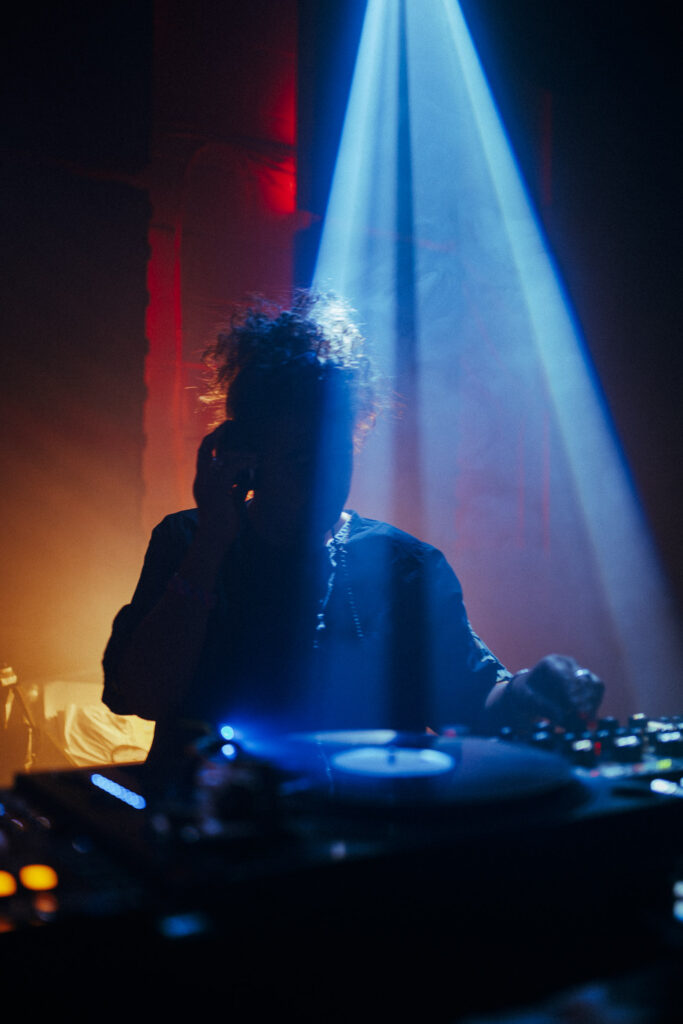
And how did your life as a DJ eventually begin?
Jane Fitz: For me, DJing started with making tapes for friends, taping things off the radio, making my little own compilations. That’s DJing too. I’ve always presented music to people. I’ve done it forever. It’s almost like the time before that I can’t even remember, because I was too young, you know. So, it’s just part of me, and so there was never a beginning or an end. It’s just part of my life.
You have a huge record collection that seems almost like a living companion to you.
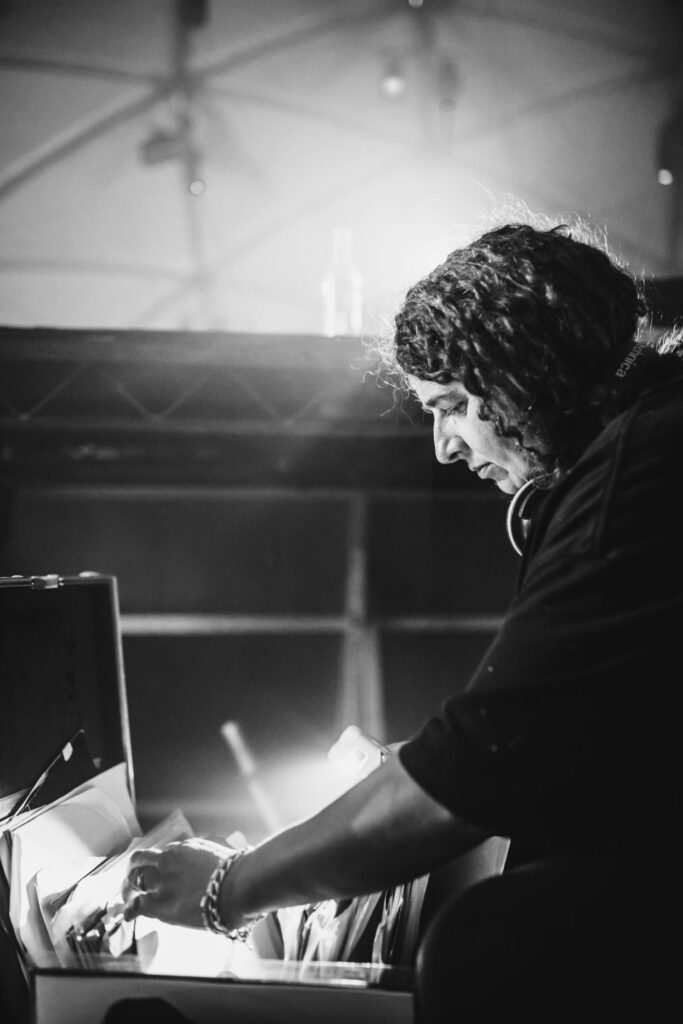
Jane Fitz: Sure, my record collection isn’t a graveyard. It’s a living organism. It needs pruning, caring for. It’s constantly moving, evolving, changing shape. And I’ve never felt like I “own” the music, even though I have a big collection of records. I’m more of a custodian. What matters is what’s inside the collection, and what stays in your head and your body. Even today, I wouldn’t usually play something the same night I buy it. I need to live with it first. So when people give me a record in a club, which happens a lot luckily, I still probably won’t play it that night. I want to check it out first.
And you do all this strictly on vinyl. You don’t play digitally.
Jane Fitz: Yeah. It’s just because that’s my preferred format. A record has never let me down. The technology is simple and it works. You put the needle on, it’s amplified, and we dance. I don’t need to complicate my life. In a club situation, with my reading glasses, my long hair, the headphones, I just don’t want more screens. It would be too much. On top of that, vinyl feels natural to me because I live with it.
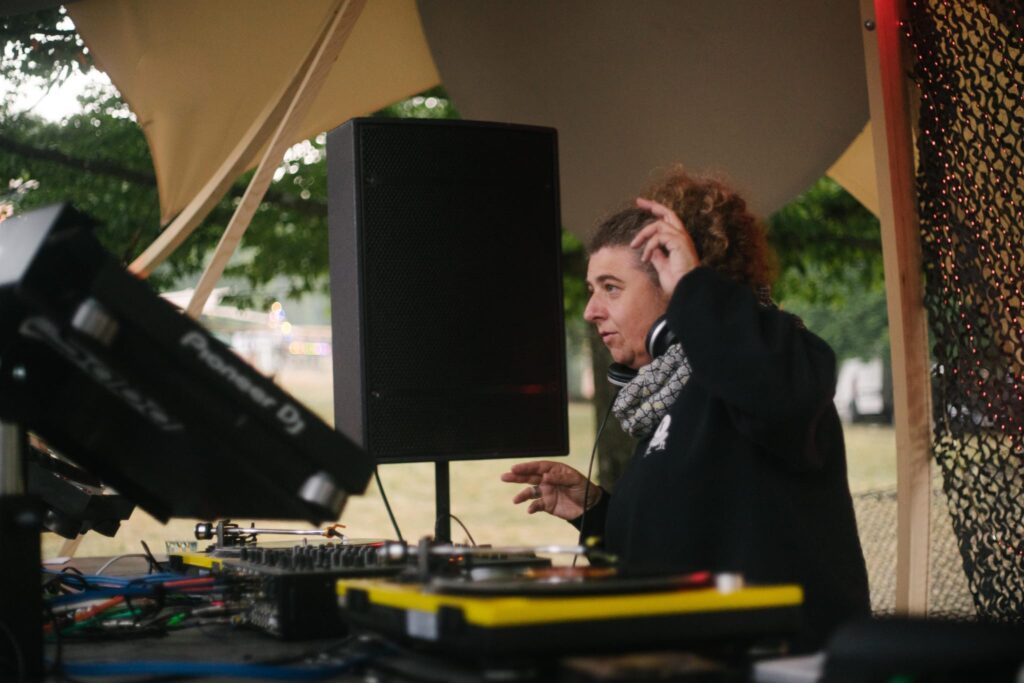
Tonight, you’re playing a house set at Panorama Bar. A few weeks ago, I heard you in Berghain, where you played a techno set with trance elements. Do you have any genre constraints?
Jane Fitz: If there’s something particular about my DJing, it’s that I don’t have genre constraints. I’m not trying to be eclectic, but I’m not afraid of any genre either. What I care about is the vibe and the emotion inside the music. Around 2013, after 20 years of deep house and tech house, I got bored. I went back into trance and early techno and got obsessed with that sound for a long time. Then I realised I was pigeonholing myself again. That’s not me. I still love deep house. I also love techno, downbeat, psychedelic stuff. Now I try to integrate all those strands. It feels more honest. I always say I can look at my records and hear them, you know, by just seeing them on the shelves. So, sometimes, if I’m looking for inspiration, I’ll just wander my eye across the shelves. Hang on a minute. What was here? Oh, what was here? Where was I here? Where was this? And what went with this? Oh, hang on a minute. Maybe this would go with this. And somehow you find something that goes with something else. And you’re like, Yeah, this is actually going to work. I played some trance records last week with an Afro Cuban jazz drumming record. It was amazing. On paper, they shouldn’t work, but they’re psychedelic sounds, so they work.
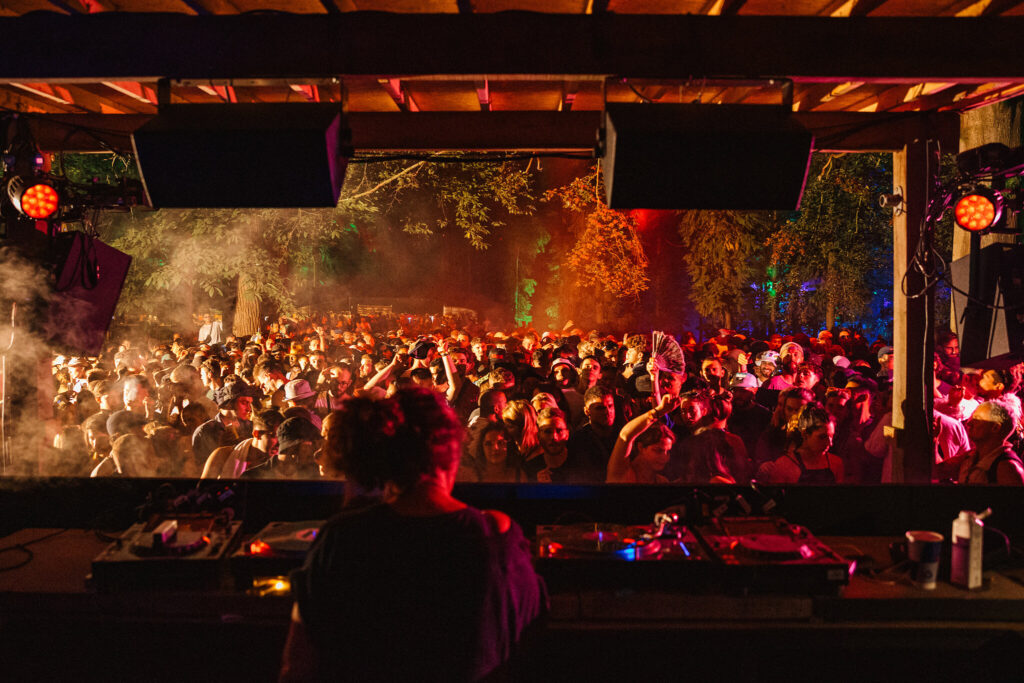
As you prefer long sets, there is a lot of room for such experiments.
Jane Fitz: I feel handcuffed by the idea of a two-hour set. You need time. At least an hour just to settle in – check the sound, the room, the people. Then you can relax. Only then can you really expand. That’s why I love playing long sets. Why give people a snapshot of something? Unfortunately, that’s the way festivals often work. And all the DJs who inspired me – from Ron Hardy and Daniele Baldelli to Patrick Forge – played long sets. Exploration takes time. You can’t step into a booth and instantly be relaxed. It’s a process.
You learned a lot about that process through running your own nights in London. In the late 1990s you started Peg, and later came Night Moves with Jade Seatle. So you have a lot of experience.
Jane Fitz: Sure, but it’s not everything. When I started Peg, I didn’t know what I was doing. They were either 100- or 500-person parties; they were completely different every time. And I always closed. I put myself on closing duty because I figured I would need to deal with everything else beforehand. I was booking, promoting, doing the door, and then playing the final set – everything. I made loads of mistakes, but the vibe was right. They were friendly parties.
Then Night Moves came out of that spirit. Jade and I didn’t plan to play back-to-back – it just happened. And I don’t even know if Jade and I love playing back-to-back together. We love hanging out in the booth. That’s for sure. We have a great time together in the booth. We never set out to make Night Moves an “all-women” party either. We book people for the music, full stop. It’s never been about identity – it’s about connection. Now that we’re bringing Night Moves back after years away, it feels exciting.
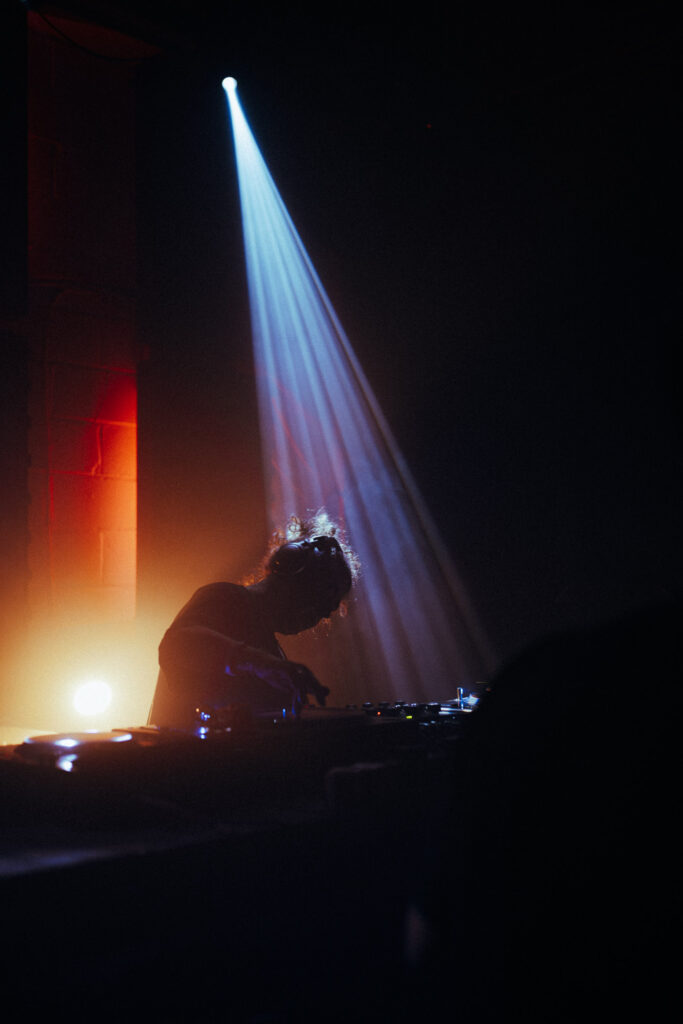
You tour frequently across the globe. Do you approach each country differently? Do you play different records on different continents?
Jane Fitz: Sure. I always do my homework. I see who’s been there, see who’s played the same parties as me, just to get a feeling for it all. Whether it’s in Latin America, Goa, or Panorama Bar, I research the club, the history, the time of day, the context I’m playing in. I never just “turn up and do me.” It’s about me in that time and place. Tonight I might play a deep house sunrise set at Panorama Bar. Soon I’ll play in Goa. And I’ll play psychedelic techno.
And after all those years of DJing, what does DJing still mean to you today?
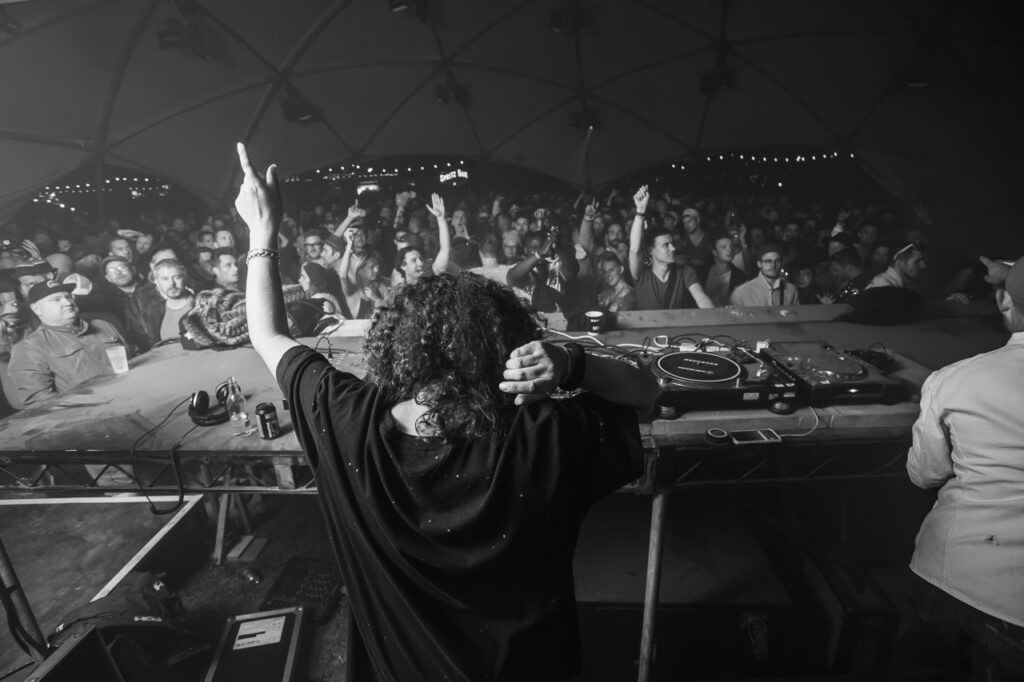
Jane Fitz: DJing is still core for me. It’s about translating every meaningful dancefloor experience I’ve ever had and trying to recreate that feeling – that rush – without the drugs, just through music. I want to feel all that even though I’m more or less sober. Like 15 years ago at Plastic People on a Thursday night on a cold, wet December evening in London, no drugs, no drink, just there to listen to somebody, getting cocooned into the moment. The best parties are individual experiences shared collectively. I don’t think dancing is a collective experience. It’s a very individual one. You’re in your own world, but together. If you open your eyes and connect with someone, you’re sharing your individualism – you are not becoming a mass. That’s what I miss when I see huge crowds all filming in unison. And the last time I experienced that, was in Ukraine, where you would see people fully in their own vibe, but everybody together. For me, parties are adventures. You arrive with friends and immediately disappear into your own journey. Something happens to you – that’s what stays with you.
Do you discuss these things with other DJs?
Jane Fitz: Yes, with certain friends of mine. We intellectualise it, you know. We really, really pull it apart. A good number of my best friends are DJs now, and they all live in different parts of the world, as well as in the UK, and we do collectively talk about it. I think it’s good to do so.
And it all depends on what your journey is with this job. Like for me – I mean, I call it a job now – but this is a fundamental part of my life that has always been there. So if I discuss DJing, it’s like discussing family or food. This is a fundamental pillar of my existence, and I can’t remove it. I need it.
We don’t have weekly club residencies anymore, so this is how you build continuity and trust. People come to those sets because they want to know: what is she doing this year? It’s almost like a project, like theatre.
And to do this job and not go mad, you must intellectualise it sometimes. You must create space for it in your life. My job is to make people’s week feel a little bit lighter or make them feel a bit more connected to themselves because of a record that I play. I spread joy. I’m a facilitator. It’s not about me being bigger than the music. If you stay connected to that, you don’t lose focus.
Together with David Fogarty of the Berlin-based record store Sound Metaphors, you recently released the compilation Mysterious Vastness on his label Transmigration. What can you tell us about it?
Jane Fitz: Everything I have to say about it is written in the booklet, which explains the whole story behind it. But in short: the compilation started with me collecting records made in the postcode district of London where I grew up. I found one obscure proto-rave record from 1991, flipped it over, and saw the address – it was from next to where I lived. I had no idea that music had been made there.
So I started researching. I used Discogs, searched postcodes, dug for years. Most of the records were cheap and overlooked. And I kept doing it, uncovering all this fantastic music over probably a 15-year period. Eventually I made a mix that went a bit crazy online. Then David suggested turning it into a compilation for his label. And this compilation connects all my skills – DJing, research, history, journalism. Everything feeds into everything else.
We’re only at the beginning of the year, but your schedule is already full until December. What are you looking forward to most?
Jane Fitz: I can’t wait to do loads of things. I guess the longer you do this and the older you get, the harder it is to keep challenging yourself, but you must find ways. So I’m really excited that Night Moves is coming back for the first time in seven years. Obviously, I’m very excited to go and play psychedelic records at a club in Goa. I’m super excited about that.
And to play O.Z.O.R.A. this year, which is the biggest festival in Hungary. Or, for example, Essaim in Paris, a very exciting new club in Europe run by the old Concrete crew. I’ve already played there and, in the future, I have a Sunday afternoon slot where I play for five hours without restrictions.
What keeps me excited overall is being able to move between different scenes – Panorama Bar one week, a psychedelic festival the next, a morning set at Dekmantel, an 1980s boogie set at Houghton. The fact that I’m able to infiltrate all these different scenes, or be welcomed by them, is just great.
Also, I love building long-term relationships with places like Rural Festival in Japan, Houghton, or Freerotation.
You are a resident of sorts.
Those are the modern residencies. The format has evolved; it’s not over. We don’t have weekly club residencies anymore, so this is how you build continuity and trust. People come to those sets because they want to know: what is she doing this year? It’s almost like a project, like theatre.
If I can keep connecting all parts of my record collection to these adventures – and all parts of my history – I’m happy. Because my collection is a living organism. And so am I.
