
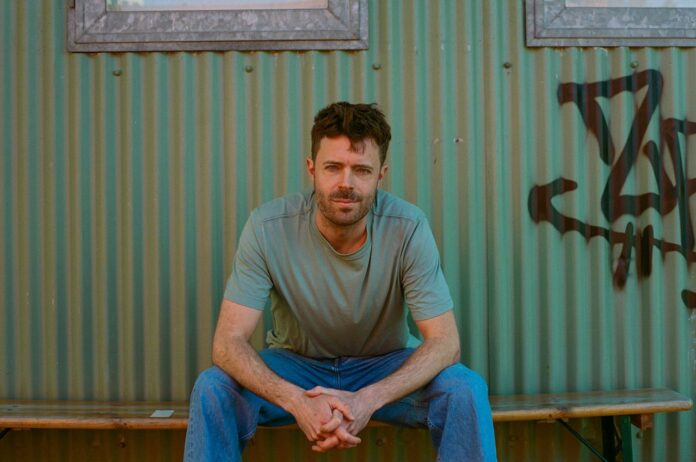
Few labels have been covered by GROOVE as encyclopedically throughout the 2020s like Rotterdam-based Nous’klaer Audio. There’s a reason for that: since 2013, Sjoerd Oberman has been developing, through his label, a profound vision of club music that pushes back against the bleakness of our time with an unusual sense of optimism.
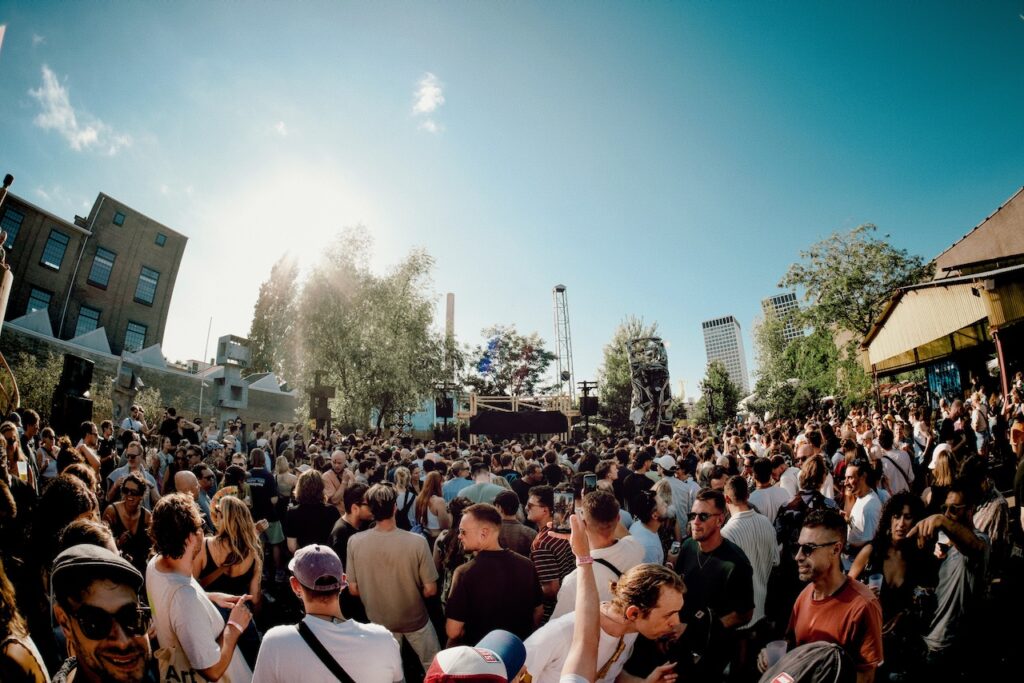
The Nous’klaer universe is further defined by the label’s stylistic openness—releasing not only house-leaning club tracks but also indie, singer-songwriter, and ambient music—as well as by its monochrome artworks with distinctive color gradations and its events, most notably the Nous’klaer Audio Festival, the third edition of which is set to take place at the end of June.
Paul Sauerbruch and Alexis Waltz met Sjoerd Oberman at Berlin’s Hotel Michelberger for an in-depth conversation about the origins and philosophy of his label. The night before, he had performed at a Nous’klaer label showcase at Globus, the upper floor of Tresor.
GROOVE: The Nous’klaer releases have an undeniable dancefloor energy. How did running the label translate into starting a festival?
Sjoerd Oberman: The first edition in 2023 was mainly about celebrating the label’s 10 year anniversary. I wanted to get as many people from the label together at one party as possible. I think we ended up with at least 30 artists.
Why did you start the label back in 2013?
I’ve always tried to create opportunities for artists and discover new people. When I used to work at Clone, I realized that it’s much easier for artists to get a release if they already had one before. When somebody would send a demo, the first question in the office was usually: Do they already have a release? or Are they already a known artist?
Back then I thought it could actually be interesting to turn that logic around. Maybe it’s more exciting if somebody doesn’t already have a release, because then you can really build something together – help shape a career, work closely with the artist, and present something genuinely new.
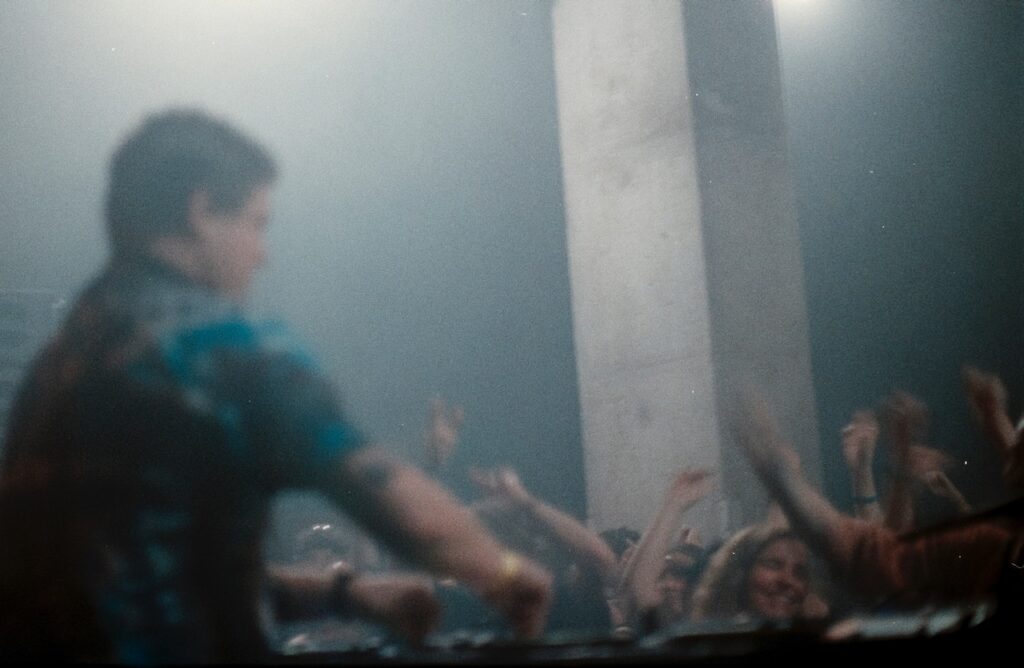
The artist benefits from that, too, because once they have that first release, it becomes much easier for them to find another label. With the festival, I wanted to apply that same idea: giving artists slots at an event where they maybe hadn’t played before. But at the same time, the first edition was really just about celebrating and finally having everybody together in one place. That had never happened before.
Did you organize other events before?
Yes, but those were club nights with three or four artists mainly. We used to do club nights, also in Rotterdam. But it was quite hard. I think people knew the label, but they were spread out over the whole world. In Rotterdam itself, it wasn’t so well known that if you would do a party, it would automatically sell out. That wasn’t the case at all in the first ten years. But then, as we did this festival, I actually noticed that there were a lot of local people interested in the label and in the music.
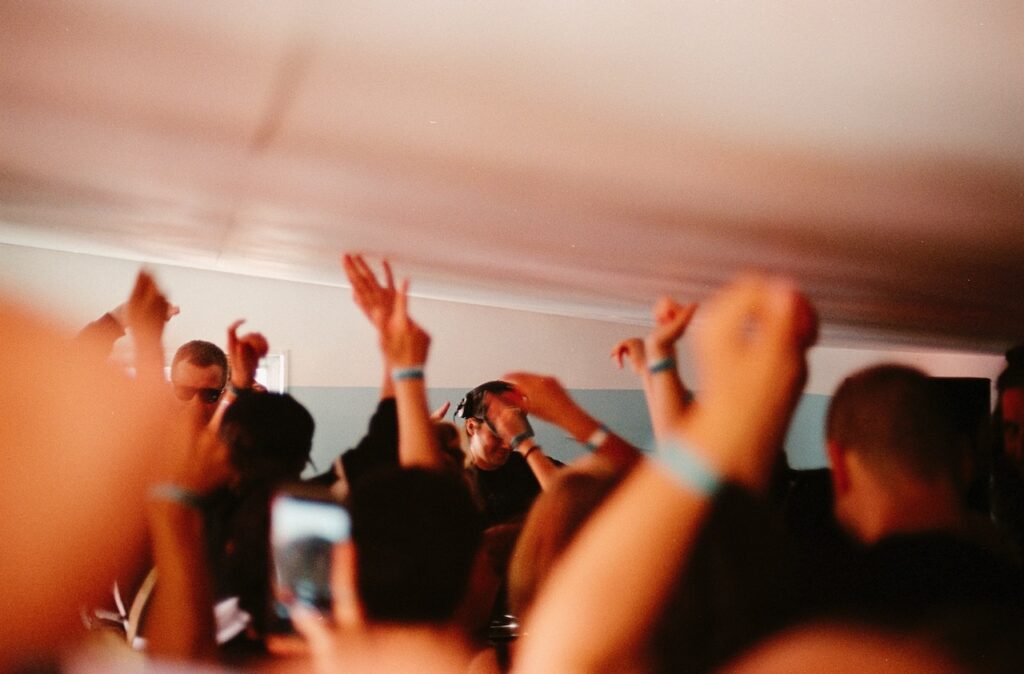
Maybe that is one of the reasons for its longevity. Nous’klaer has a recognizable aesthetic, but it’s not tied to a specific trend. It feels open and there is always a dialogue with music beyond the club.
I hope so. I guess that’s also what I like about music. I can listen to really different types of music, even in one day. And when I DJ, it can be lightweight house, or dark techno, or something happy. So I want to release all of that and not make it too specific.
What crowd attented the festival? Must be exciting to have your fans in front of you after running a label for a decade.
That was really fun. Especially afterwards, getting all the feedback from people, I was surprised that it is something meaningful to them. That was not something I expected.
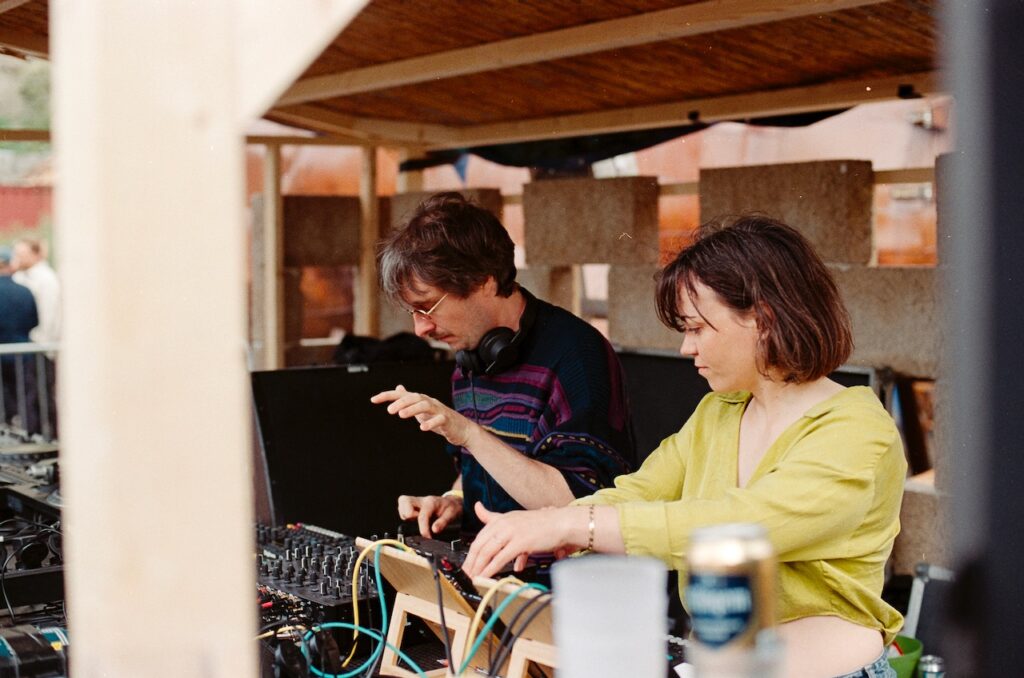
Harking back to your history: How would you describe the Rotterdam scene you grew into?
There is a huge history in Rotterdam in terms of music and techno. When I started the label, the scene in Rotterdam was a bit on the downside. Things were happening, of course, and we had some clubs, but it wasn’t really something that connected all the people in a way. This changed with club BAR, a place that sadly doesn’t exist anymore, just like club Perron. But new things, like club export and Sonoor, are opening now. I feel people connect and work together more and more.
When you grew up, what was the dominant sound? What were the parties most people would go to?
When I started going out, it was the minimal days.
What did it feel like for you to work at Clone? Nous’klaer tends to sound bright and playful. Clone on the other hand is quite serious, dark, and intellectual. Did you feel like an outsider?
Clone is a warm family where I worked for 10 years. I think I was always a bit of an outsider music-wise though.
You were also quite young, probably.
I was still studying. The first party I organized was in 2011 or something. I invited John Talabot to play in Scheveningen, on the beach. He wasn’t that well known back then, but I had heard this XLR8R podcast, and I was blown away. I thought: I want to hear this, I want to book this guy. So he came by, and the next day he said: I want to go to Clone. But I actually didn’t know Clone yet. So I was like: Okay, sure, I’ll pick you up at the hotel and we’ll go there. And then I was like: There’s a record store like this in my own city? So even I didn’t know about Clone, even though I had already been playing records for a couple of years.
Where did you buy your records?
Online. At decks.de, djshop.de or HHV. And maybe at a couple of second-hand shops. But that was also the moment in which I thought: Okay, I want to work here. Immediately. I think the same year, or a year later, I applied. Serge, the boss, invited me, and we talked. It was a nice conversation about music, Zeeland and cycling, and he said: Okay, you can start on Saturdays.
How did you come up with the idea to start your own label?
The first release was from Mattheis. Basically, the friends I made through playing records were doing an event where Mattheis played live. I went there and thought: This is crazy good. Why can’t I buy this on vinyl at Clone? Actually, I’m organizing Nous’klaer Festival together with one of the friends who organized that particular party.
Then, I had the idea that I should maybe try to press a vinyl record with his music. But I didn’t know anything, and I didn’t even know him well. So we connected, became friends. It took a few more years, but eventually, that became the first release.
The first release went really well, so I always kind of stuck with that idea of finding somebody within your own group or city and working with them to make something together.
People who work at a distribution or at a record shop end up listening to much of the sound of that place. You developed a sound of your own.
It’s hard to put into words because it just comes naturally. I like a lot of the Clone music. I’m just not very restricted to, let’s say, only The Hague sounds or something. It’s a bit more open. Clone today is also broader than it was back then, I feel.
Your younger brother is on the label, right?
Yeah, Oceanic.
The size of the label’s roster is impressive. How do you manage to find so many artists who fit into your sound that live in your very own city?
It comes naturally, I think, because it’s just more fun to work with people who are close to me. It also works both ways; if the group of artists grows organically, so does the sound of the label with them. Sometimes you start playing music from someone because you get demos from them. And if you play it a couple of times, you start to feel a certain connection with the music. If that grows, then I feel like: Okay, I want to release this. There are lots of ways, actually.
Let’s talk about the artwork—how did you come up with the concept of bright colors? Is there an idea behind it, or is it just your personal taste?
Both. At least when I started, I was very determined to make it colorful, because everything was black and white and grey. I really wanted something that would feel a bit more friendly, with bright colors. I stuck with that for most releases. For albums, I want the artwork to fit the music. And for EPs, I want to focus more on the music itself, so the artwork is more abstract and doesn’t influence how you hear the music too much.
To return to your biography again: How did you get into music growing up?
I always listened to music and was searching for new music since my early high school years.
What did you listen to in the beginning?
Lots of compilation CDs. Kitsuné compilations, for example. I listened to a lot of punk things, and there were lots of bands, but also electronic music. Later, when I discovered techno, I realized that some of the stuff I had listened to in high school was already connected to that. Like Autechre’s album Amber for example. I just wasn’t conscious of what it was.
Which DJs did you listen to at the time?
I went to quite a lot of Minus nights and to Time Warp, when they were in the Netherlands at least. Time Warp was minimal, but also James Holden. I also went to nights in Amsterdam, like Studio 80, where Marco Carola and Onur Özer would play. Mostly that. And then, when I started DJing, it changed a bit, of course, because I started thinking more about what I wanted to play.
What did you play in the beginning?
More disco, because I would play for free at these super small bars that had a DJ setup. There would be maybe 100 people, but you still had to entertain them.
Did you play vinyl?
Yeah, only vinyl.
Wow.
Only disco, or indie remixes. I actually found a mix from then hidden on my SoundCloud. I made it public again now of you want to hear that. (laughs)
And then you started working at Clone and got more into proper dance music?
Well, through going out, I was already going to more club nights. But Onur Özer, for example, was not something you would find at Clone. That was really two different worlds. When I started at Clone, I learned more about the history of music.
To circle back to the festival: Events tend to become more commercial these days. You’re unwilling to compromise.
I mean, the festival was a success, but more on the experience side. It’s not like we earned any money. If 100 fewer people had come, I would have been a big loss. We just broke even every year.
But it’s also amazing for the label as a brand. It’s impressive to build a festival like this as a label.
Usually, it’s the other way around: You start a festival and then a label. For me, the festival was something extra. But now it’s quite big, so I put a lot of time into it. It is successful, but more from an experience point of view. If anybody looked at the financials, they would say: You’re crazy. This is not a good business decision. (laughs)
We hear from many promotors in Berlin it’s a challenge just to break even these days.
I really believe club nights are catalysts for people to meet and help each other. Other things can come from it. I’ve noticed that within the last years already: So many people want to help, or do something, or maybe they find a new artist and send it to me, and then we start working together. Those things are invaluable.
You read that quite often in interviews with musicians: We started making music together after we met at a club or a festival.
Yeah, a good example: In March, I rented out the Willem Twee Studios in Den Bosch for four days, where Konduku and Erik Luebs are going to make music together. That’s really something that happened because I released tracks from both of them, they met at the festival, they liked each other’s music, and then I proposed a plan like this. Now they’re excited to collaborate. These kinds of things would not happen if there were no parties, or if there were only releases. They would be on other sides of the world and not meet.
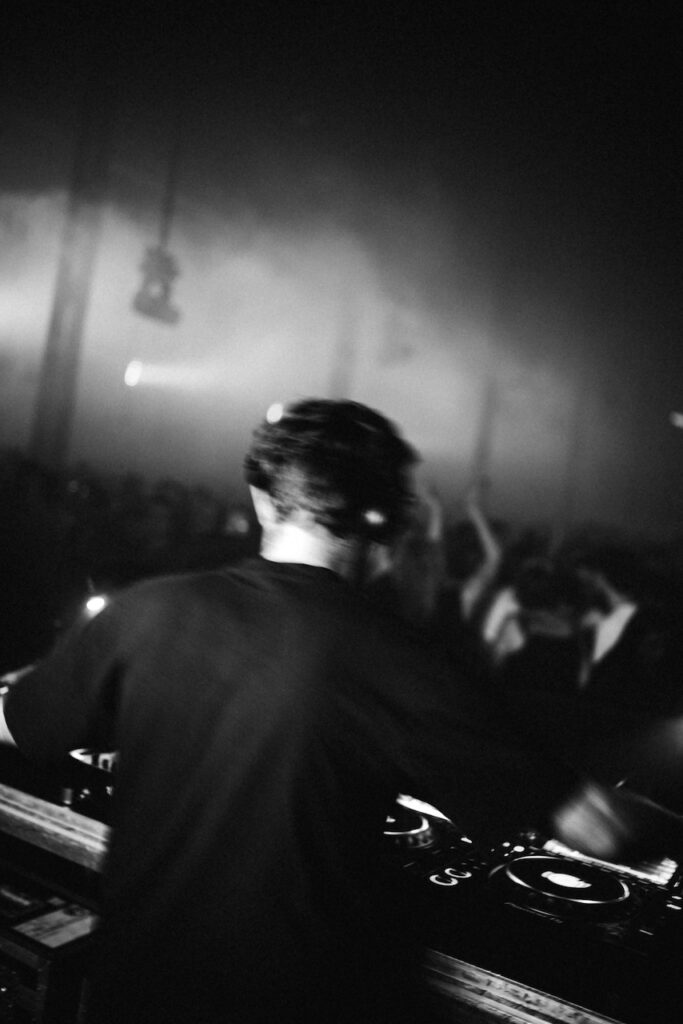
What did you play at the festival last year?
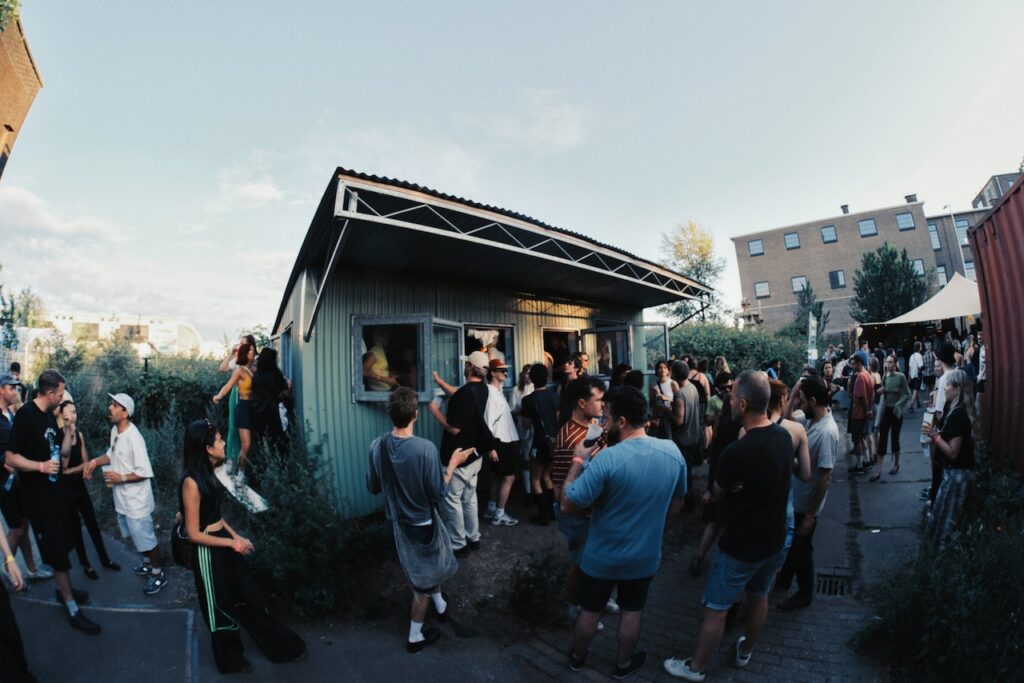
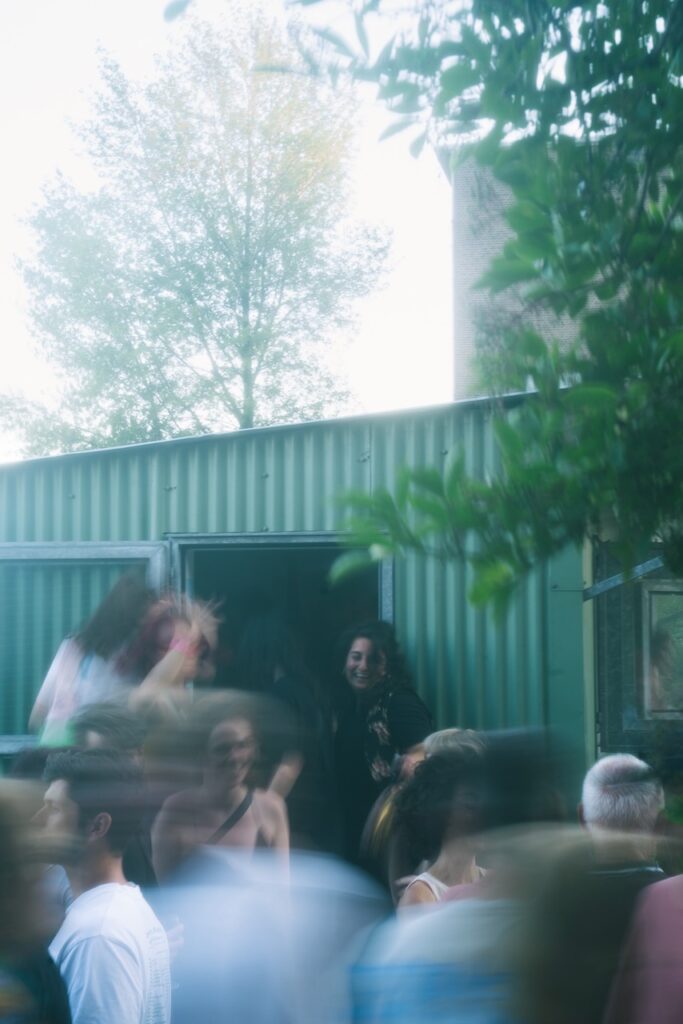
Last year, I played at the smallest stage. It’s for maybe 15 people. It’s like one container with windows in it. We call it De Rave Keet—The Rave Shed. It’s super funny, because people start standing on the benches outside. It feels as if the festival has already been going on for three days, that kind of vibe. So I played quite cheesy tracks there. (smiles)
Do you ever have the feeling that you need to represent the label when you play? Can you play off-genre—like hard techno?
Yeah, I did that once, and somebody actually said: Oh, I didn’t expect this from you. So I guess if I play super hard techno, it’s probably not easy.
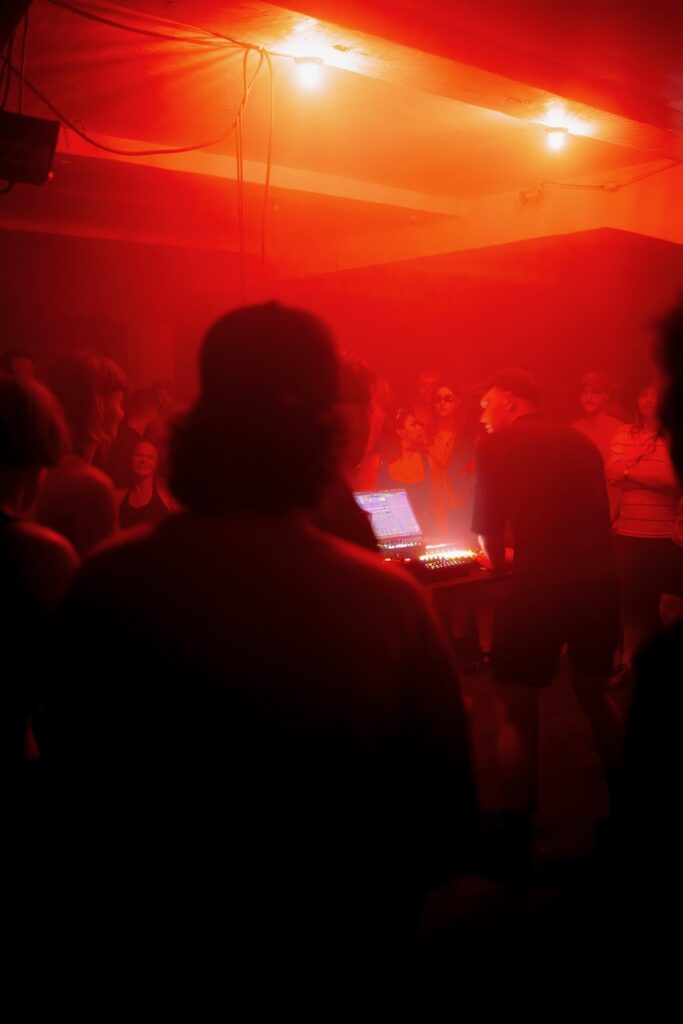
How many Nous’klaer records do you play in a set?
Maybe 10 to 15 percent. So quite a lot. But a lot of them are also tracks that I probably won’t release at all. Yesterday at Tresor’s Globus, I played two tracks that I received last week. For me, that’s the moment to try them out.
How was the feedback?
It was good. People stayed past closing time, and the room was actually still full at the end. But then somebody from the club came with a note: 6:45. (laughs)
And how was the feedback to those unreleased tracks?
Good. The last one I played was from Erik Luebs. We’re not going to release that one, because he is making a completely new version that will be on an EP. But I thought this was a nice version for an emotional closing.
What do you enjoy about playing unreleased music?
It’s not to tease people. It just keeps it more exciting for me. It’s a way to build a connection with a track and try it out. In a way, it’s like office time.
Looking at the future of Nous’klaer and the festival, how do you see the sound developing? And do you imagine the festival eventually growing beyond your own immediate involvement?
I don’t really look further ahead than one year. Last year, I thought a lot about what I wanted to do next, because I had released a lot of albums in the past one and a half years. I realized that it took me a lot of time. There are so many things to do. The track sequencing and editing process with the artist can take months or years. I really take my time with that because I want it to be perfect. Then there’s the artwork and promotion. I love those albums but it was a lot of work.
I started DJing a bit more last year, and I thought: Okay, maybe from now on I want to focus more on the clubby pieces. So the Mattias [El Mansouri] and Martinou records are the first in a series of eight or ten clubby records that are all kind of ready. Basically because producing albums takes a bit too much time, especially now that I also want to do the festival. And I like DJing so much right now that I also want to release more of the tracks I play. So the focus is going to be on that.
What are you preparing for the festival? What will be new?
We’ll have two new outdoor stages this year and a way bigger chill-out and foodcourt. Some sound systems will change and there is a communal garden next to the venue that now will be part of the terrain for more green. Draaimolen is also back for a stage-hosting.
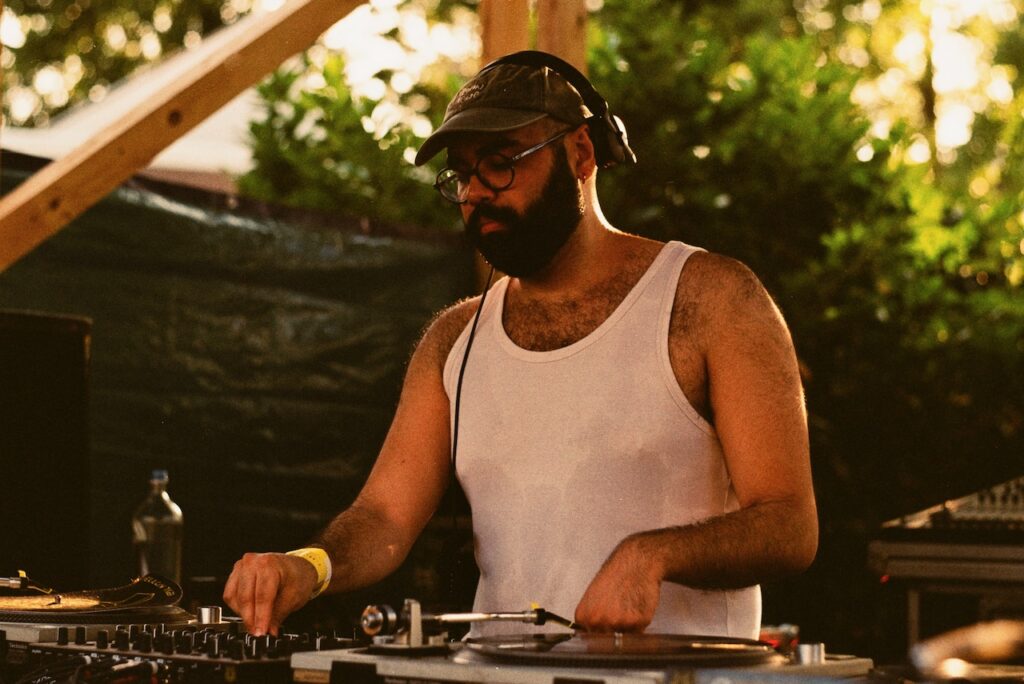
There’s going to be a live set by Martinou together with Nthng, a Dutch techno artist that I’m very excited about. They haven’t played together yet, but Martinou told me they made some tracks together. So they will do a live set together for one and a half hours. There will be Katatonic Silentio together with Azu Tiwaline doing a live set, also for the first time. Dresden will do their signature style of long, journey-type sets. There are going to be a lot of the label’s artists and locals of course; Ivano Tetelepta, Mata Disk, Hervé, lenxi, Nala Brown and many others. Meetsysteem is going to come, doing some kind of poetry reading while playing. Lawrence Le Doux will play live. I will play B2B with a new artist on the label named Maask, whose debut EP will be out in June.
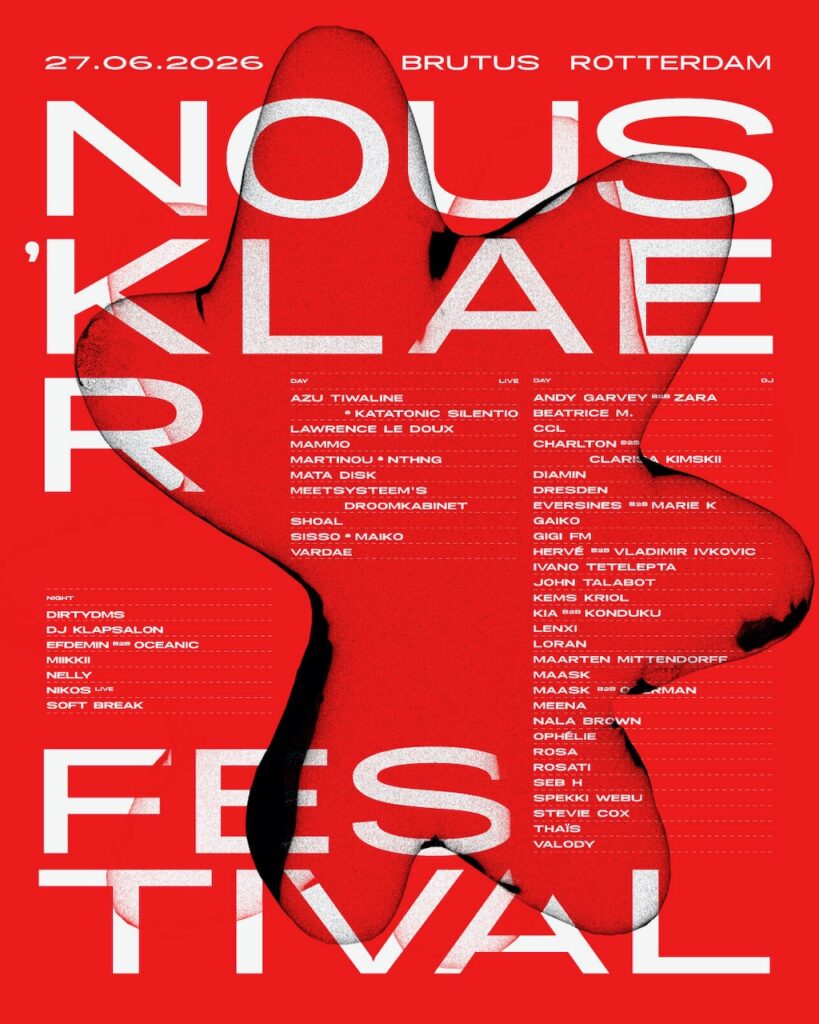
Tell us about Brutus, the festival venue in Rotterdam. Why did you pick it? What is the beauty of that place?
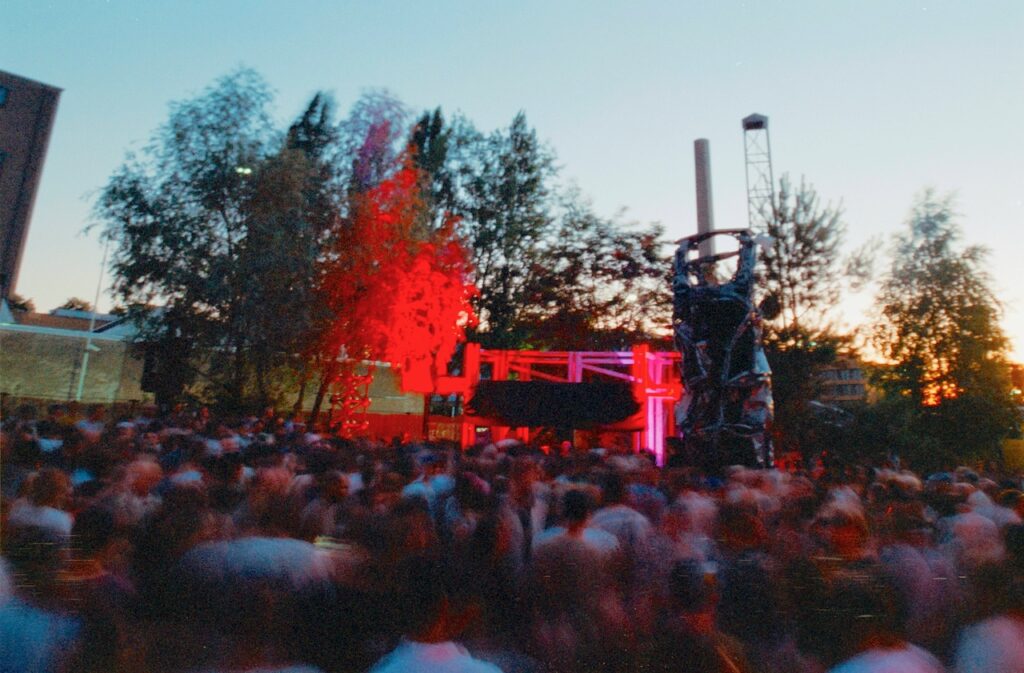
It’s a warehouse, or rather a combination of different warehouses. It’s the studio, workshop, and atelier of a well-known sculptor, Joep van Lieshout. He makes these really larger-than-life sculptures. Because it’s his workshop, there are maybe 50 of them standing there, also some half-finished ones. It’s one of the areas in Rotterdam that is still not developed, so a lot of creatives have moved there with their studios.
That brings a very special dynamic to the place. You feel like something is being created there. It’s a very inspiring place. And I think that was kind of the reason why I wanted to do the 10-year anniversary there, which became the first festival. It just fits with how I work with the label: finding artists, creating something yourself within your local network, and trying to do as much as possible within your own group.
You told us that you had seven floors. That’s a lot of floors for 2500 people.
As you said, the label has a lot of different styles. I wanted all of them to be present at the festival. The most logical solution was to have multiple stages. A lot of those stages are really small. There’s one stage for 20 people, one for 50 or 80, one for 200, one for 300, and then some bigger ones. That’s nice, because you can create very different moods just through the size of the room and how the room looks.
Were you able to experience the festival for yourself?
No. (laughs) I mean, the first year I was able to, but the second time it was a very busy day. I did the main organization together with a friend and his partner, and we had mostly volunteers. So last year was a bit too much. This year we have a way bigger team for the full preparation which really feels like a big step up. Hopefully it will mean I can enjoy more and host artists and guests personally.
Track list:
Amandra x Mattheis – Carapace [Nous’klaer Audio]
Mike Schommer – Kingmaker [Lempuyang]
R.O.W.S. – 4.4 [St. Odes]
Nikos – … [TBA]
Vardae – 1989 [Cosmic Wave Records]
Yraki – Tendril [Goodness]
Vera Logdanidi – Water Bubble Floating in Space (Psyk Remix) [On Board]
Sindh – Occam [space•lab]
Biocym – Hidden Navigator [fórum]
矯激 [ Radical ] – Tool 007 [Auto Release]
Konduku – … [TBA]
Takaaki Itoh – Like You Said (Rumenige+Loktibrada Remix Version) [Wols]
Anthony Linell & Evigt Mörker – Med huvudet under armen [Northern Electronics]
JD Typo – Concrete Forest [Wex Records]
FC Kahuna – Hayling (Deetron Remix) [Subtract Music]
Erik Luebs – … [TBA]
